
Light access routes, compounds and work areas reliably while reducing carbon, infrastructure requirements and routine intervention.
ReLuminate® hybrid solar-wind units provide autonomous temporary lighting for defence, nuclear and other controlled environments, supporting project carbon reduction objectives without diesel generators, temporary cabling or a grid connection.
On controlled sites, even routine lighting requirements can create additional activity to manage. Fuel deliveries, refuelling, servicing, temporary cabling and groundworks all introduce people, equipment and dependencies. ReLuminate® provides a simpler, self-contained diesel-free alternative.
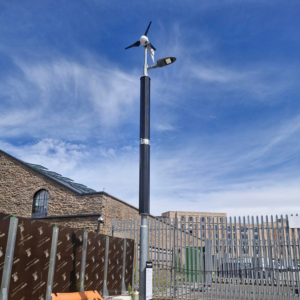
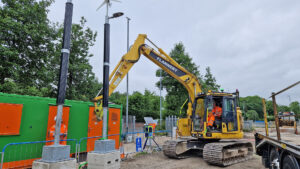
Remove routine fuel deliveries, refuelling and generator servicing associated with temporary lighting.
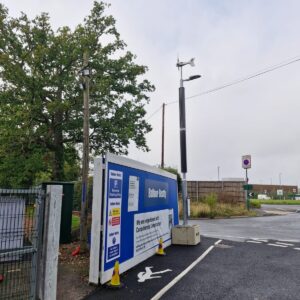
Deploy lighting without trenching, buried cables or extending temporary electrical infrastructure.
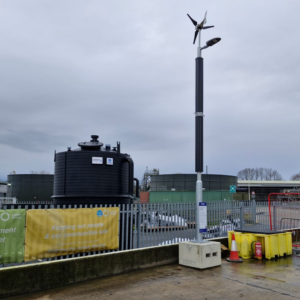
Replace temporary diesel lighting with hybrid renewables, reducing fuel use and associated operational emissions.
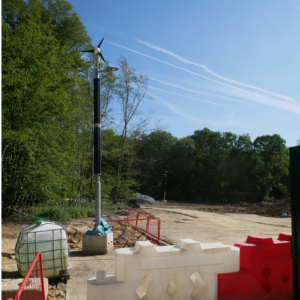
Reposition units as phases progress, to match how access routes, compounds, work areas and operational requirements change.
ReLuminate® combines solar generation, wind generation and battery storage in one self-contained lighting tower.
Its hybrid design is suited to variable UK conditions and shorter winter days, with battery storage providing resilience when renewable generation is low.
High-efficiency LED luminaires and intelligent control help use stored energy efficiently, providing dependable illumination without an external generator or power supply.
With no cable route or generator position to accommodate, ReLuminate® can be placed according to the site layout, operational requirement and risk assessment.
Typical applications include:
ReLuminate® can be deployed selectively rather than replacing every light on site, particularly where groundworks, cabling, fuel management or fixed power would add unnecessary complexity.
For projects working towards demanding carbon targets, changing established site practices can be difficult. ReLuminate® offers a practical way to reduce reliance on diesel-powered lighting without requiring a wholesale change to the temporary lighting strategy.
Units can be introduced in defined locations where diesel use, cabling or groundworks create the greatest carbon and operational burden. Performance can then be assessed under real site conditions, helping build evidence before wider deployment.
At RAF Leeming, ten ReLuminate® units restored lighting to were deployed on the main access road without excavating to repair failed underground cabling, providing a live test in a controlled environment.
VentaVolt also has experience supplying ReLuminate® to a major UK nuclear infrastructure project, alongside other complex infrastructure applications.
Temporary lighting can involve more than the lights themselves. Fuel deliveries, refuelling, generator servicing, temporary electrical distribution and groundworks can all create additional activity to coordinate and contribute to project carbon emissions.
ReLuminate® is self-contained, removing many of those lighting-related dependencies while providing the illumination required and replacing diesel fuel with renewable energy generation.
ReLuminate® is designed around variable UK conditions rather than relying on solar generation alone. It combines solar and wind generation with battery storage, helping maintain energy availability through shorter winter days, cloud cover and changing weather.
Typical applications include access routes, walkways, compounds, car parks, entrances, boundaries and temporary work areas.
It can be particularly useful where bringing power to the required location would involve trenching, additional cabling, generator deployment or repeated intervention – or where diesel lighting conflicts with site carbon reduction objectives.
Lighting requirements depend on the activity, location and site risk assessment. We assess the area, required illumination and operating pattern before recommending unit numbers and positioning.
Energy generated by the solar panels and wind turbine is stored within the integrated battery rather than being used only as it is generated.
Combining two renewable energy sources also reduces dependence on a single source, while battery capacity provides stored energy for periods of low generation.
No external electrical connection is required for the temporary units, so there is no need to install power cabling to each lighting position.
This avoids lighting-related excavation and ground disturbance where conventional temporary or permanent power infrastructure would otherwise be required, reducing both disruption and the associated materials and plant requirements.
ReLuminate® generates power from solar and wind rather than relying on a diesel generator, removing fuel consumption and associated operational emissions from the lighting it replaces.
Off-grid hybrid solar-wind lighting also reduces associated activities such as fuel deliveries and refuelling. For projects that need evidence before changing established approaches, units can initially be deployed in a defined area and performance assessed and evidenced before wider adoption.
Yes. Because each unit generates and stores its own energy, it can be repositioned without extending electrical infrastructure or redesigning cable routes.
This allows temporary lighting provision to adapt as compounds, routes, work areas or site requirements change.
VentaVolt has supplied ReLuminate® for defence, major infrastructure and nuclear project applications.
At RAF Leeming, ten units were installed on the base’s main access road as an alternative to excavating and repairing failed underground cabling. VentaVolt has also supplied ReLuminate® to a major UK nuclear infrastructure project.
Yes. ReLuminate® can be introduced in a defined location first, allowing the project team to assess illumination, operating performance, carbon reduction potential and practical suitability under real site conditions.
This provides project-specific evidence before any decision is made about deploying units more widely.
If temporary lighting is creating unnecessary carbon emissions, fuel movements, groundworks, cabling or power dependencies, we can help identify where an autonomous alternative could simplify your site.
Share a few details about your site and lighting requirements with us, and we’ll recommend a practical approach to off-grid lighting that will cut carbon, reduce site activity, and avoid trenching or cabling.