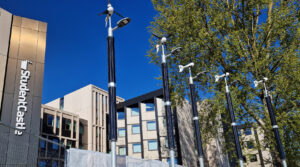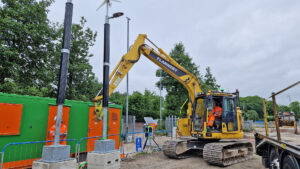

Renewable, self-powered systems for flexible temporary lighting and continuous site surveillance layouts – without diesel generators, grid connections, trenching or temporary cabling.
VentaVolt systems combine solar, wind and battery storage to help reduce fuel dependency, simplify deployment and maintain reliable performance in real UK site conditions.
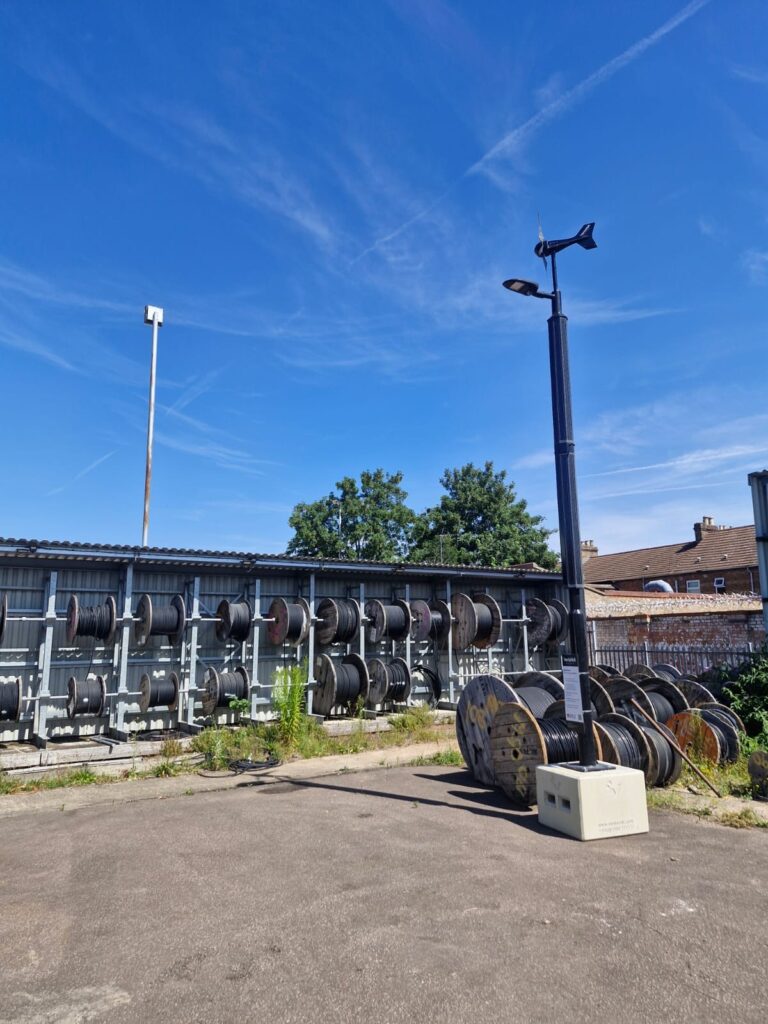
Reliable off-grid lighting for defined site areas
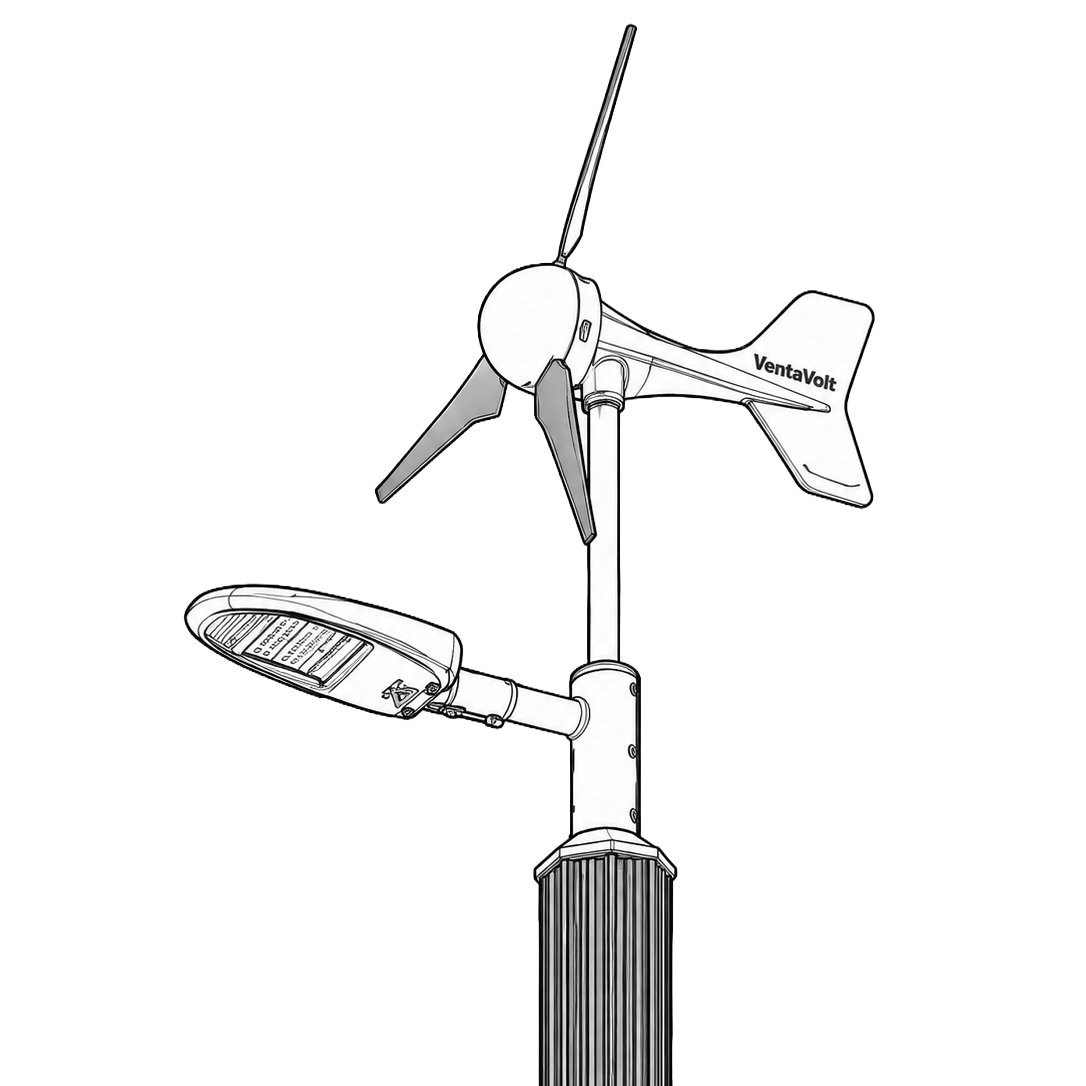
ReLuminate® Single-Head provides self-powered site lighting for locations where diesel, grid connections or temporary cabling are impractical, costly or operationally risky.
Using hybrid solar-wind generation, battery storage and intelligent control, each unit is designed to deliver dependable lighting year-round, in real UK site conditions.
Use it for
Key benefits
Typical coverage: approx. 500m²
Best for: walkways, compounds, car parks, access routes, perimeters
Wider coverage where the layout requires it
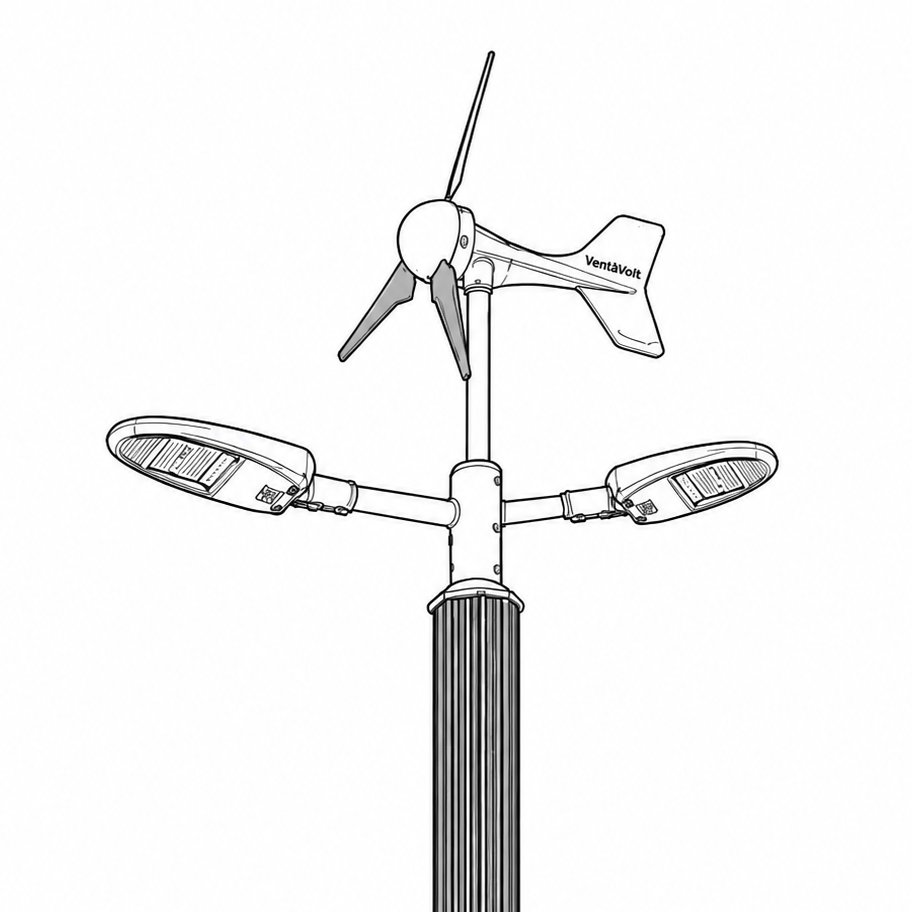
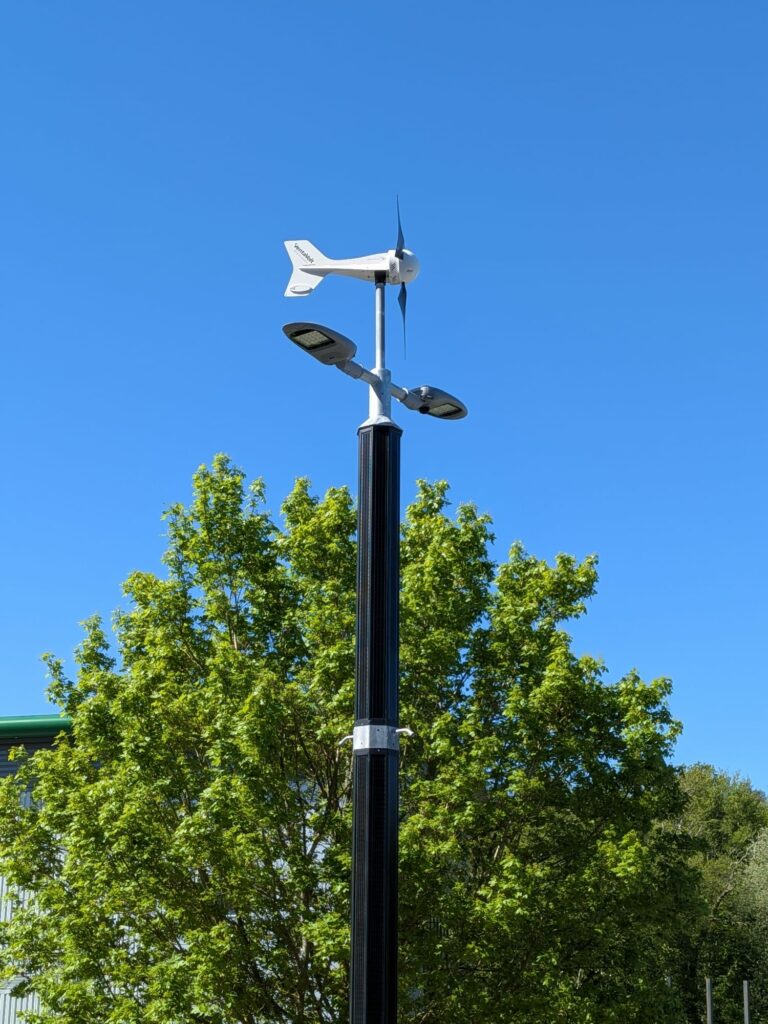
ReLuminate Dual-Head is designed for applications where one unit needs to illuminate in two directions or a wider central area.
It increases typical coverage from approximately 500m² to 900m², while maintaining the same runtime, reliability and installation requirements as the single-head system.
Use it for
Why choose dual-head?
Where two single-head units would otherwise be used back to back, one dual-head unit can provide equivalent opposing light-head coverage from a single system.
The hire cost is typically around 10-15% more than a single-head unit, but the cost per area covered can work out better where the site layout suits wider dual-direction coverage.
Key benefits
Typical coverage: approx. 900m²
Best for: wider areas, dual-direction layouts, back-to-back applications
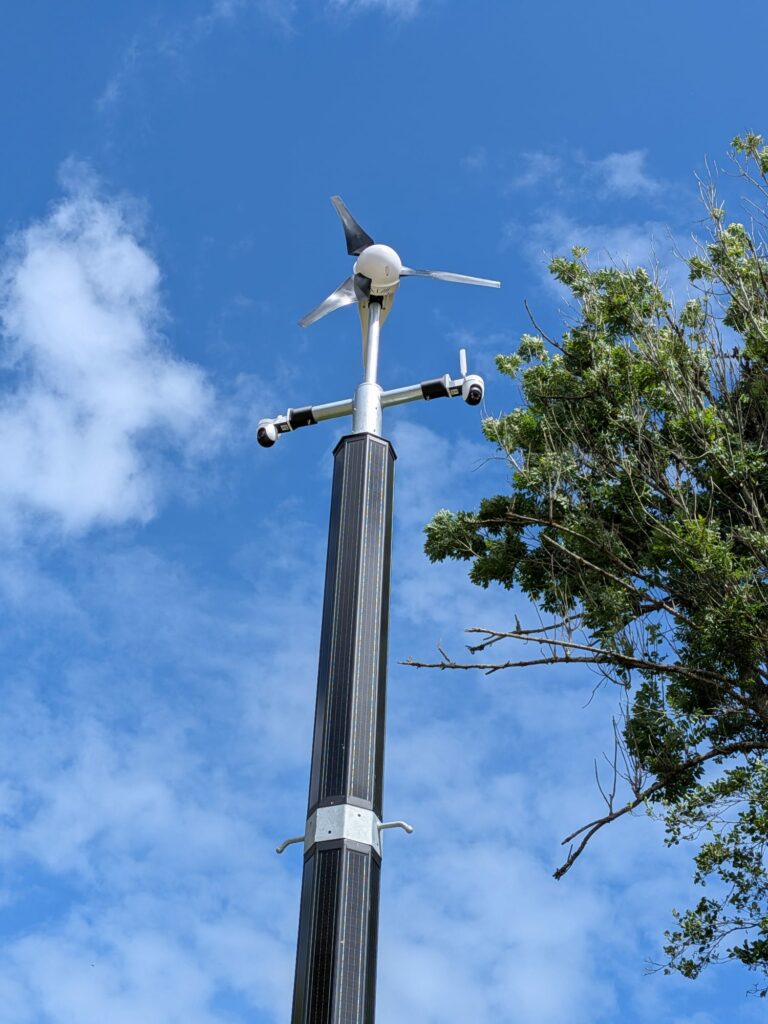
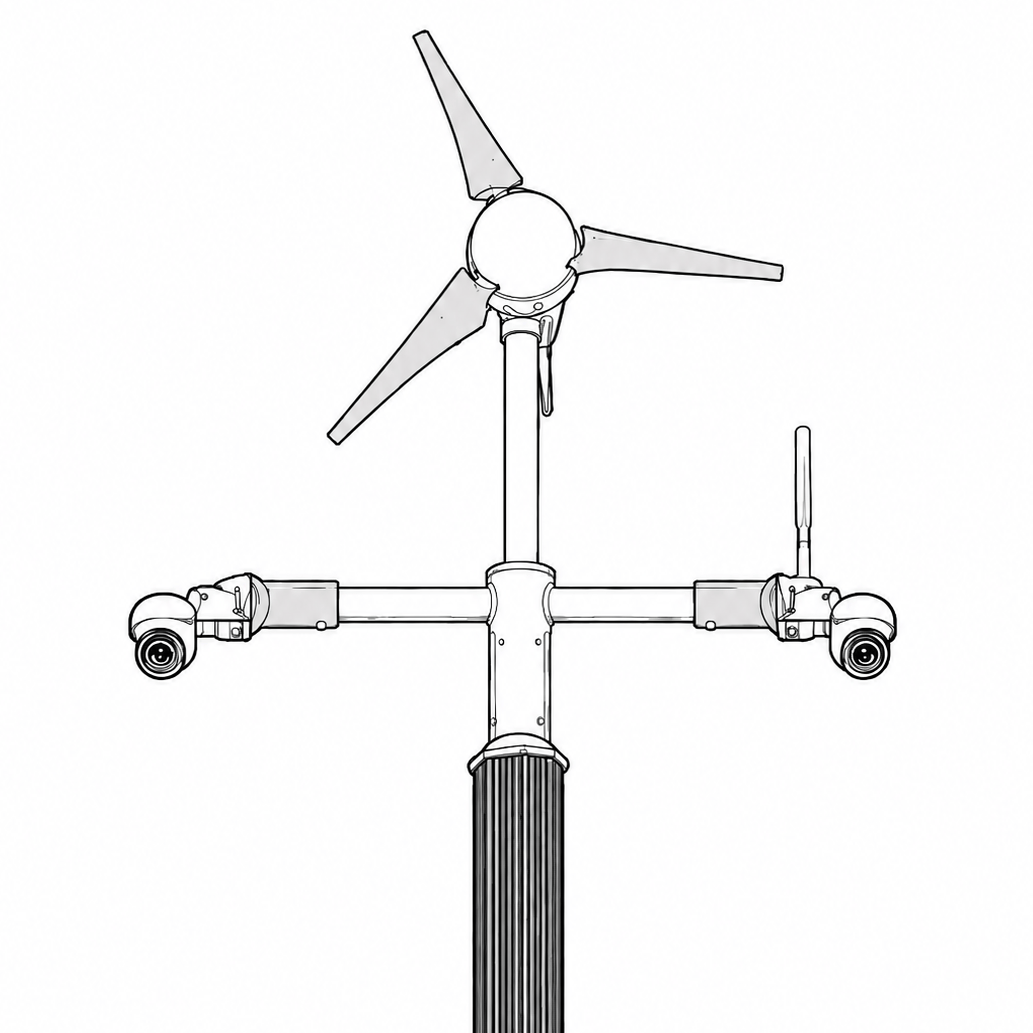
100% off-grid CCTV for continuous site security
ReSentinel provides off-grid CCTV coverage without generators, grid power, trenching or permanent cabling.
The system combines hybrid solar-wind generation, battery storage, 4G connectivity and smart detection to support secure, uninterrupted site operations. It’s designed for reliable 24/7 operation all year round, with no seasonal vulnerability in normal use.
Use it for
Key benefits
Operation: 24/7 all-year CCTV
Best for: remote compounds, temporary sites, storage areas, exposed locations
Solar-only lighting and CCTV towers can struggle in UK winter conditions, as although direct sunlight isn’t necessarily needed – daylight is enough to generate power using photovoltaic cells – the days are shorter which means less energy can be transferred.
Our ReLuminate® and ReSentinel units combine solar and wind generation, because when daylight hours drop, wind typically increases. This complementary profile is what maintains consistent performance from this type of hybrid off-grid system, so lighting and CCTV performance can be relied upon, even when the conditions can’t be.
ReLuminate® solar-wind lighting and ReSentinel monitoring is designed with battery resilience built in. Each unit has sufficient stored capacity to run for multiple nights without input, plus in reality you rarely get zero generation – low-light solar still contributes, and wind conditions often offset low sun. The outcome is continuity of lighting and CCTV without daily intervention, even on dull days.
No, provided you’re not relying on solar alone but opt for a hybrid system. Solar-wind lights and cameras are specifically designed for variable weather environments like the UK, where relying on a single energy source would introduce risk.
ReLuminate® is purpose-designed for the areas that keep sites safe, secure and operational. This includes walkways, compounds, car parks, site perimeters and access routes – the environments where consistent, reliable ambient lighting matters most is where off-grid, self-powered units deliver real operational value.
Rather than relying on high-intensity task lighting everywhere, many sites use ReLuminate® to cover these areas efficiently, reducing cost, complexity and dependency on fuel or temporary power.
In practice, solar-wind lighting can cover a significant part of a typical construction site; it’s particularly effective for walkways, compounds, car parks and perimeter areas.
For high-intensity task zones, additional lighting may be required – but many sites use solar-wind units as part of a blended lighting strategy, reducing diesel usage (and all its associated costs) while maintaining appropriate lighting levels across all areas.
We don’t leave that to guesswork. We provide every customer with a site-specific lighting plan, guidance on unit positioning, and support to align with relevant lighting standards.
The key is applying the right lighting type to the right area, not over-specifying by default.
There’s no generic answer to this question, because site layouts vary wildly. But there’s still a simple way to find out – just drop us a line with your requirements and we will review your site plan, model coverage, and recommend the appropriate number and positioning of ReLuminate® lighting towers.
This ensures performance is designed in, not left to chance.
It’s a straightforward process, as the units are effectively drop-and-go. There’s no cabling, no fuel, no setup or configuration, and no assembly. ReLuminate® and ReSentinel temporary units can also be repositioned quickly and easily as site phases change; this flexibility quickly becomes valuable on live sites.
The dual-head option is best where lighting is needed in two directions from one central position. Typical applications include central car parks, dual walkways and central reservations between two-way roads.
The main benefit is wider coverage. A single-head unit typically covers around 500m², while the dual-head option covers around 900m².
In the right application, yes. Where single-head lights would otherwise be used back to back, one dual-head unit can provide the equivalent of two single light heads from one system.
No, the dual-head light option does not have different runtime or reliability.
Not always, it depends on the layout. The dual-head option typically costs around 10–15% more than the single-head unit, but it can deliver a better cost per area covered where wider or two-direction coverage is needed. Drop us a line to find out whether it might be better to specify single- or dual-head lights, we’re always happy to review site plans.
Not when you look at the full picture. Diesel lighting can appear cheaper at the point of hire, but it brings ongoing costs and dependencies including fuel and price volatility, refuelling labour and logistics, maintenance and breakdown risk, and cabling or temporary power where required.
ReLuminate® eliminates those cost categories. With no fuel and minimal maintenance, our lighting system delivers stable, predictable lighting costs from day one. For many sites, that shift – from ongoing spend to self-powered operation – is where the real savings are made.
Because there’s no fuel and no engine, no routine servicing is required. In fact, maintenance is typically limited to occasional visual checks and basic cleaning if required – though our vertical solar panels are designed to self-clean in normal rainfall, keeping upkeep minimal.
This ensures performance is designed in, not left to chance.
Solar-wind lighting and monitoring towers remove diesel consumption entirely, which is the primary source of emissions in traditional temporary lighting and CCTV.
While exact figures vary by site and usage, removing both the fuel emissions and the emissions associated with refuelling logistics, there’s a significant reduction possible – making ReLuminate® and ReSentinel ideal for projects or locations where ESG targets or planning conditions apply.
Detailed lifecycle analysis is available, and as part of our continuous innovation approach we’re continuing to refine reporting to support sustainability requirements.
ReLuminate® removes a major category of programme risk entirely. Traditional lighting introduces dependencies including fuel deliveries, maintenance cycles, mechanical failure and human intervention, which can cause programme delay and disruption.
In contrast, solar-wind off-grid lighting operates autonomously – meaning those failure points disappear, leading to less interruption, fewer call-outs, and more predictable site conditions.
Yes, and this is often where ReLuminate® proves itself. We offer a free two-week live site trial, plus support with positioning and application, which allows you to evaluate performance in real conditions, not base your decision-making on assumptions or guesswork.
In practice, lighting requirements generally change as projects progress, and demand is rarely consistent from one site to the next. For many sites, hiring off-grid lights is the lower-risk option. It avoids upfront capital cost and keeps lighting aligned with the needs of the programme.
That said, buying units can make a lot of sense for long-term and repeat use across multiple sites, resulting in maximum carbon saving and value for money – though hire can provide a straightforward route to confirming suitability on site before committing to capital costs.
Data can be accessed via on-site diagnostics, so we’re able to give you a clear and quantifiable idea of how ReLuminate® or ReSentinel
is performing on your site.
In practice, this is far less of an issue than people might initially think. ReLuminate® and ReSentinel units are heavy, and require specialist equipment to move, plus they’re not visually or mechanically attractive targets. Across several years of deployment, we’ve not had any incidents.
Yes. ReSentinel provides 24/7 off-grid CCTV for sites that need remote surveillance without grid power, generators or cabling. It can be used alongside ReLuminate® lighting or as a standalone security system.